The Cost of Big Sky (and why)
For a long time, my novel didn’t have a name. Or rather, it had many names.
Titles hold a lot of weight. They’re both an invitation and a promise. They have to entice someone to read the story without explaining it. They have to feel true…not just to the plot, but to the themes and beyond.
After months of circling possibilities, I’ve landed on a working title that finally feels like it can carry it all.
THE COST OF BIG SKY
The titles that came before
Before arriving here, I considered several other titles, each revealing something about the story, but none felt quite right.
Big Sky
This was suggested by my author mentor at the Historical Novel Society North America conference. It makes sense. And I love the boldness of it. With a show like Yellowstone having the same bold statement type of a name, as well as drawing so much attention over the years to the great state of Montana, it’s a tempting choice. The sky looms large in my book, physically and symbolically. It speaks to Montana in a way that’s instantly recognizable. But on its own, the title feels very open and dare I say, too gentle for my story, which grapples with hardship, consequence, and survival.
Homestead of Ashes
This title leaned into the destruction, loss, and devastation that shaped many homesteading lives. It captured the aftermath, but not my story’s full arc. My story isn’t only about what was lost. It’s also about endurance, rebuilding, and what can bloom out of our darkest moments.
The Longest Claim
This one speaks to time. To persistence. To the idea that some claims aren’t measured in acres or years, but in generations. I still love what this title suggests, and it reminds me of a Nicolas Sparks book I loved reading way back when (The Longest Ride), but it just doesn’t grab me the same way that The Cost of Big Sky does. And I want people who hear and see my title to know that Montana is a character as much as it is a setting, and “The Longest Claim” doesn’t do that.
What The Cost of Big Sky really means
At face value, THE COST OF BIG SKY leans toward the obvious: land, money, survival. The price of staking a claim in a place where nothing comes easily.
But the title carries more than that.
It points to the non-monetary costs. Those that don’t show up in ledgers or government filings.
The physical toll.
The mental toll.
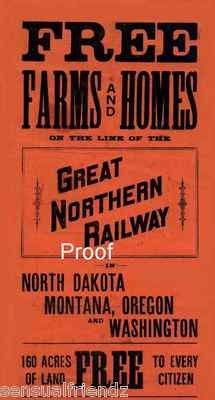
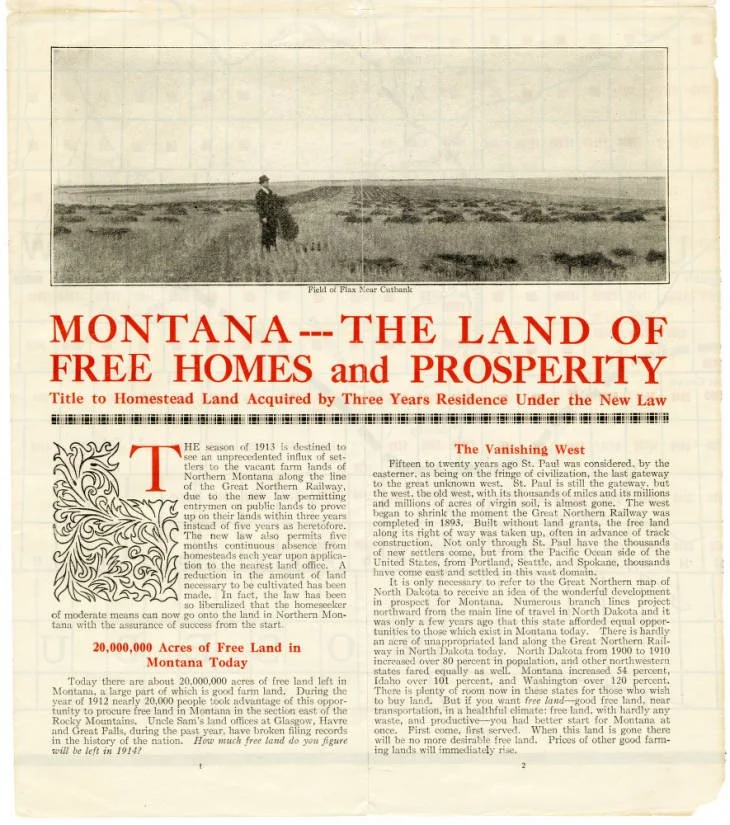
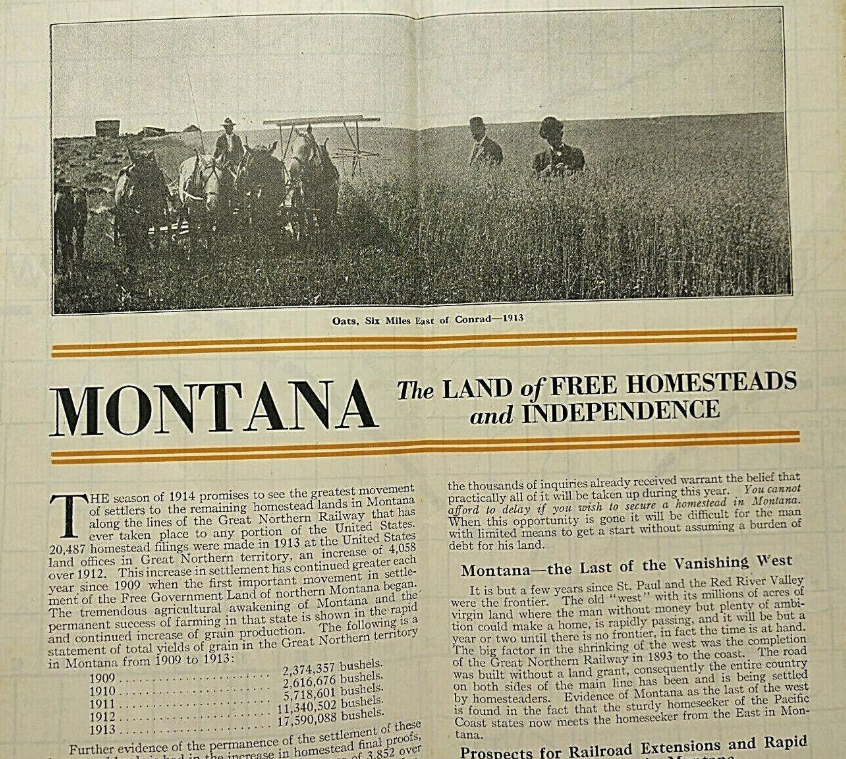
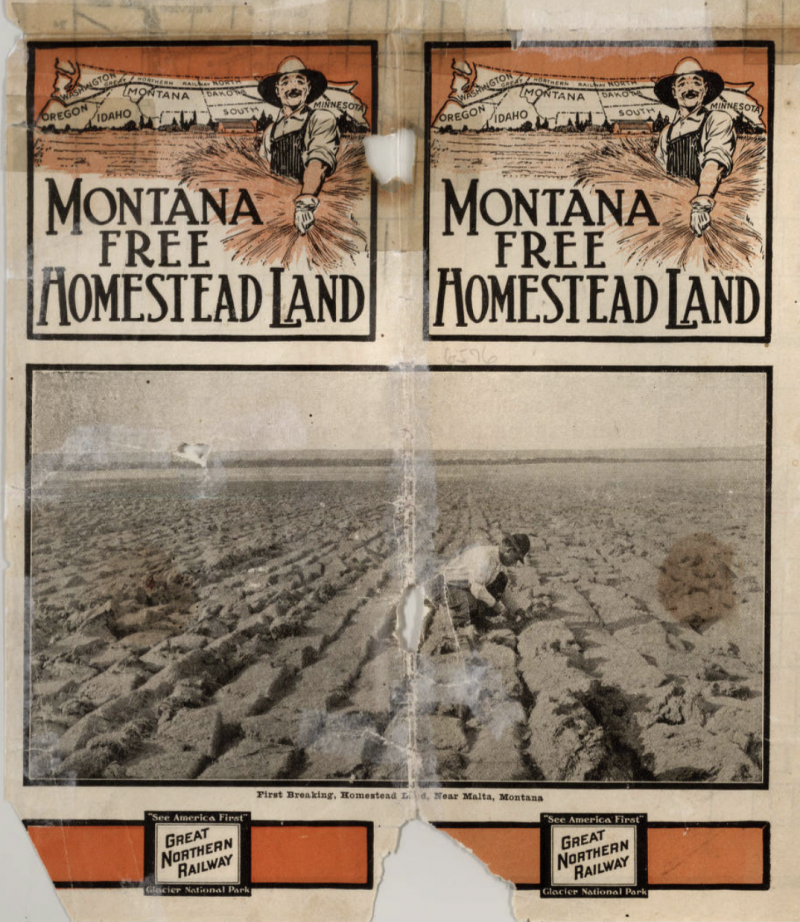
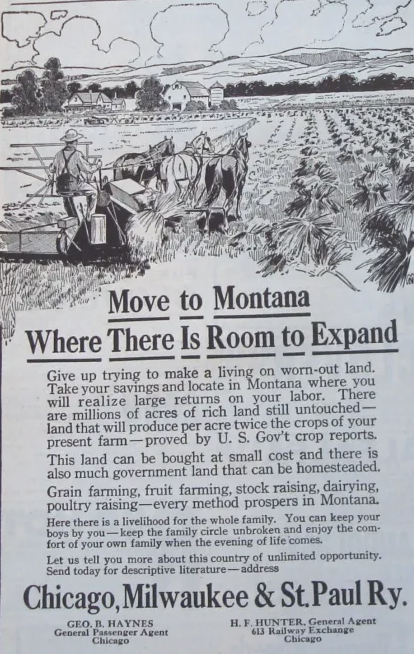
The sacrifices and losses that didn’t make it into the Great Northern Railway’s brochures and exaggerated promises.
And it intentionally speaks to something happening right now.
Past and present, mirrored
Today, Montana is often called “The Last Best Place.” But in towns like Whitefish, Big Sky, and Bozeman, everything is a little more complicated.
Rising housing costs are pushing people out of communities they’ve lived in their entire lives. Teachers, service workers, and families who once formed the backbone of these towns are being priced out by demand, by newcomers drawn west in search of space, beauty, and a simpler life.
My novel doesn’t directly address the modern housing crisis. But the resonance is there.
Because this isn’t the first time Montana has been shaped by migration.
In the early 1900s, immigrants and hopeful settlers were drawn west by the promise of land and opportunity. Just like in my novel. Today, people are moving here, still chasing a version of that dream. The motivations may look different, but the impact of mass movement on land and community is very much the same.
The title THE COST OF BIG SKY acknowledges that connection. It invites readers familiar with Montana’s present to consider its past, and vice versa.
The physical cost of the land
Homesteading in Northwest Montana demanded more than optimism.
It demanded hard work, strong backs, calloused hands, endurance through brutal winters and relentless labor. Clearing land. Building shelter. Hauling water. Growing food in soil that didn’t always cooperate.
Many homesteaders arrived believing the exaggerated claims of fertile soil and a mild climate. They learned quickly that what they saw wasn’t what they got. Their survival required so much more: adaptation, humility, and the willingness to keep going when their bodies and circumstances told them to stop.
The marketing materials advertised free land, but the land itself charged a price for every inch claimed.
The mental cost of isolation
Then there was the quieter toll.
Isolation.
Loneliness.
The psychological weight of distance, both from neighbors and infrastructure, and from the life left behind.
In my story, the land shapes not just daily routines, but inner lives. The vastness that draws people west can also swallow them whole. Silence becomes heavy. Doubt creeps in. Intrusive thoughts run rampant. The question of whether the cost is worth it lingers long after the novelty fades.
This mental toll, often unspoken in historical records and other homesteading novels, is just as central to my story as the physical struggle—more so even.
Why this title fits
THE COST OF BIG SKY holds it all for my story.
It acknowledges the beauty that draws people west, and the price that beauty exacts. It speaks to land, legacy, sacrifice, and survival, without giving the story away. And it bridges past and present in a way that feels honest to both.
It’s a working title. Publishing may change it. But for now, it’s the name that best reflects the story I’m telling, and the themes I keep returning to.
What does it really cost to claim a place? And who ends up paying that price?